A long haul rarely ends with a clean break. There is paperwork to finish, a truck to park, a message from dispatch to answer, and the familiar temptation to use every remaining minute on the phone. That is understandable. Yet a short, repeatable reset can make the next run safer and less draining.
Start by Giving the Day a Clear Finish
The most useful reset begins before you leave the driver’s seat. After parking, write down the two or three things that matter for the next dispatch: appointment time, first fuel stop, any route concern, and one item the truck needs. This takes only a few minutes, but it moves those details out of your head. Drivers who skip this step often keep replaying tomorrow’s plan instead of actually resting.
Avoid turning the end of a run into a second shift. Once the equipment is secure and the essential notes are made, let the rest of the evening be ordinary. A shower, clean clothes, a call home, a simple meal, and a little quiet time are not wasted hours. They are the conditions that make real sleep possible.
Move Enough to Undo the Cab
Hours behind the wheel leave hips, shoulders, calves, and the lower back tight. A reset does not require a gym or an ambitious workout. Ten to fifteen minutes of easy movement is often enough: a slow walk around the lot, gentle shoulder rolls, calf stretches on a curb, and a few controlled bodyweight squats while holding the truck for balance.
The goal is not to train hard after a tiring day. It is to signal to the body that the driving posture is over. Keep movements comfortable and stop if anything hurts. A consistent light routine is more useful than one intense session followed by a week of doing nothing.

Make the Next Meal Easy, Not Perfect
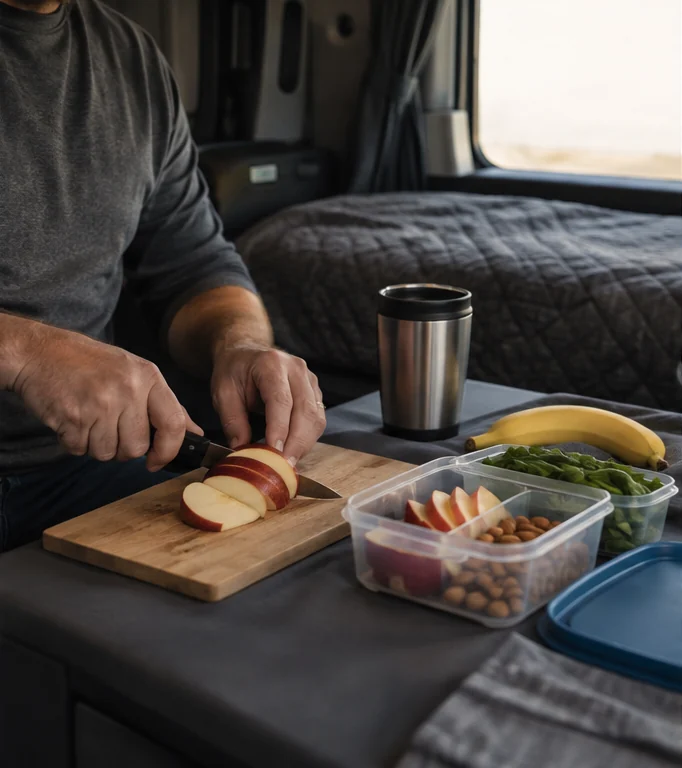
Food choices become harder when a driver is exhausted and the nearest option is a brightly lit counter full of fast food. The reset window is a good time to prepare one or two simple items that travel well: fruit, yogurt, nuts, pre-cut vegetables, oatmeal cups, a sandwich, or leftovers in a small container.
This is not about cutting out every convenience meal. It is about giving yourself one better option when the next stop is rushed. Keep water where it is easy to reach and use a refillable bottle. Dehydration can feel like fatigue, hunger, or a dull headache, and none of those help decision-making in traffic.
Protect the First Hour of Sleep
The sleeper berth works better when it has a small transition ritual. Dim the cab lights, put the phone on a charger away from the pillow, set alarms before lying down, and lower the temperature if possible. If you enjoy a podcast or music, give it a time limit rather than letting it run all night.
Sleep does not become perfect on the road, but it can become more predictable. The point is to separate active work time from rest time. When the cab stays bright, noisy, and full of unfinished tasks, the mind keeps treating it like an office.
Use Your Off-Duty Time to Reduce Tomorrow’s Friction
A reset also includes a brief look ahead. Check weather along the first part of the route, confirm parking possibilities near the next appointment, and make sure chargers, medications, gloves, paperwork, and food are where you expect them. Do not overplan every mile; conditions will change. Instead, remove the avoidable surprises that create unnecessary stress at the start of a shift.
If you are home between runs, the same idea applies. Pack the cab bag, wash the clothes you need, and leave with a realistic plan rather than a pile of last-minute decisions. A calmer departure is one of the easiest ways to carry better habits into a long week.

Keep the Routine Small Enough to Repeat
The best reset routine is the one that still works when the parking lot is crowded, the weather is poor, or the day did not go as planned. Build it around a few reliable anchors: finish the work notes, move a little, eat and drink something useful, prepare tomorrow’s essentials, and protect sleep.
Drivers are already experts at adapting to changing loads, weather, and schedules. A small reset routine uses that same skill for personal recovery. It does not eliminate the hard parts of long-haul work, but it gives every new dispatch a steadier starting point.