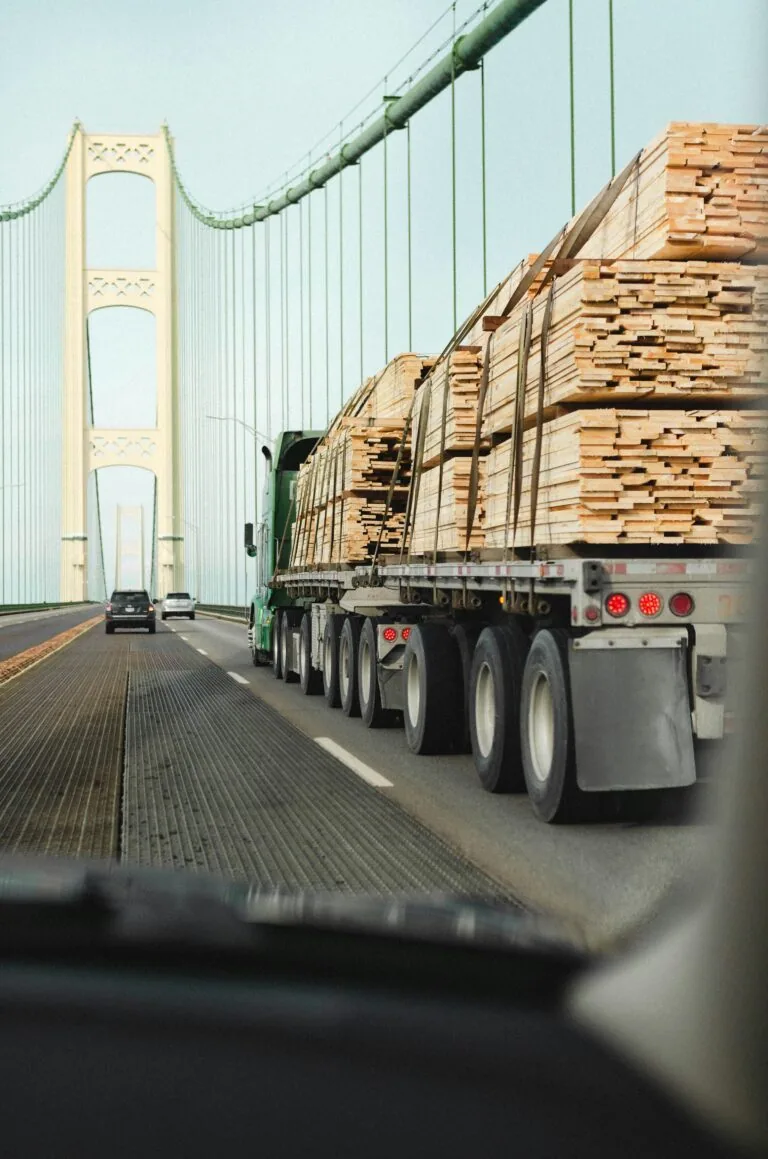
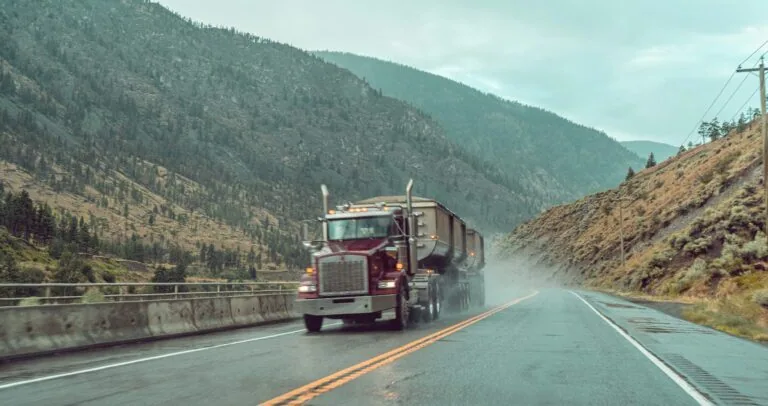
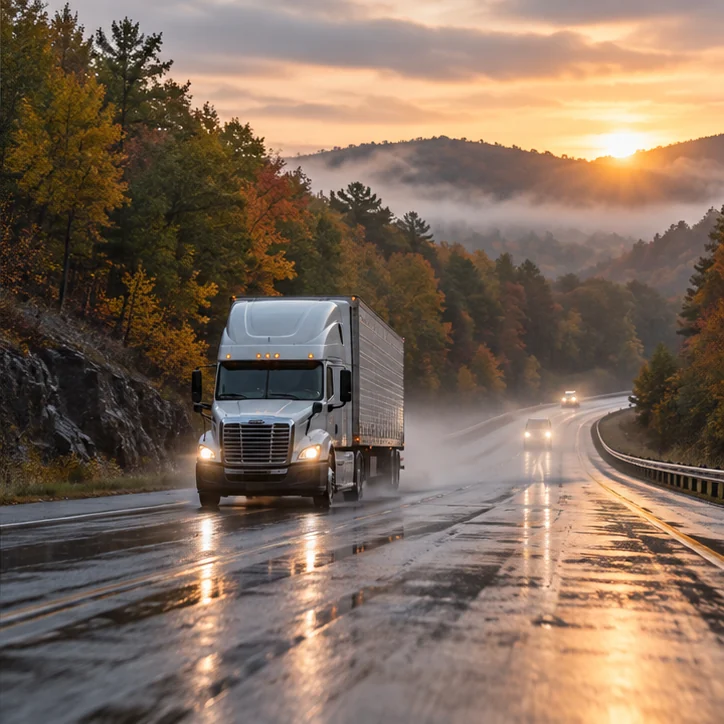
Early fall is one of the most changeable periods of the trucking year. A run can begin in warm afternoon sun and end in cold rain, patchy fog, or gusty wind before sunrise. Leaves, school traffic, shorter daylight, and the first serious storms of the season add their own complications.
The answer is not to make every trip feel like a winter emergency. It is to notice that the margin for error is smaller when conditions change quickly. A few practical habits before departure make it easier to adjust without rushing once the weather turns.
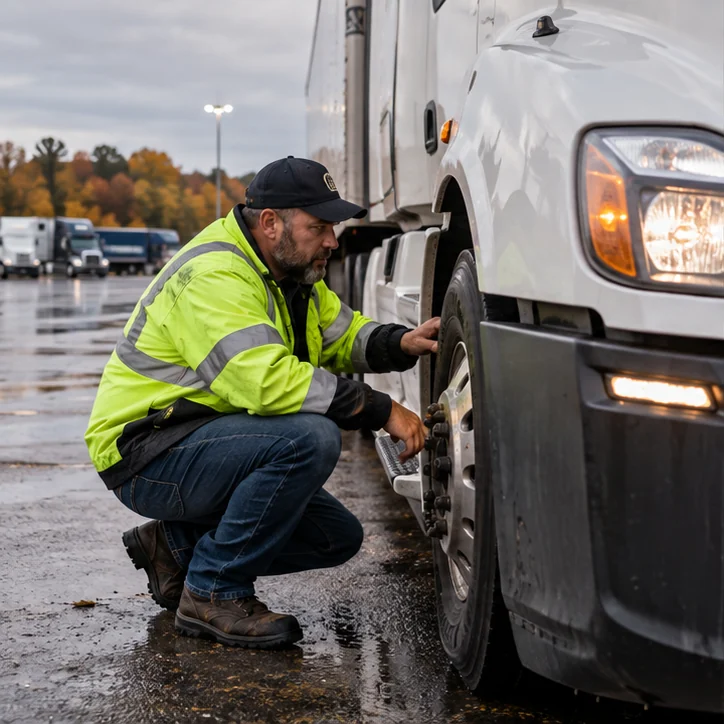
Give the Truck a Seasonal Walk-Around
Start with the items that weather exposes first. Look at tire condition and inflation, because wet pavement magnifies the cost of weak tread or an underinflated tire. Check that headlights, marker lights, brake lights, and turn signals are clean and working. A thin film of road grime can cut visibility long before a lamp actually fails.
Inspect wiper blades before the first hard rain, not during it. If they chatter, streak, or leave a hazy band across the windshield, replace them. Top off washer fluid with a product suitable for the temperatures you expect, and make sure the defroster and climate controls are doing their job. Clear glass is a safety system, not a cosmetic detail.
Build Weather Checks Into Route Planning
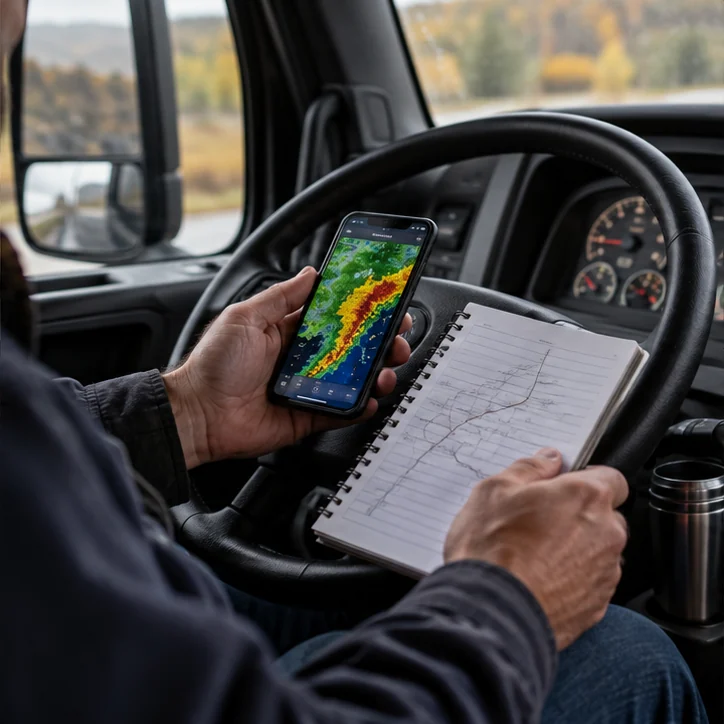
Weather deserves a place beside fuel, hours, and appointment times. Before rolling, look at the forecast for the whole first leg of the route, especially elevation changes and major open stretches. A calm start at the terminal does not say much about a mountain pass, a bridge, or an exposed interstate two hundred miles away.
Watch for the combination of wind and rain. Wind can move an empty or lightly loaded trailer, while rain reduces available traction at the same time. Fog deserves its own respect because it often arrives in low areas, near water, or just before dawn when traffic is already less predictable.
Use the information to choose a pace and a stopping plan, not to prove that the trip can be completed exactly as imagined. Let dispatch know early when a weather delay is likely. A timely update is safer and more professional than trying to recover time with less following distance or more speed.
Change Driving Inputs Before Conditions Force You To
The first wet hours after a dry spell can be slippery. Oil and debris rise to the surface, and painted lane markings, bridge decks, ramps, and steel plates can become slick. Add following distance early, ease off the throttle before curves, and make steering and braking inputs gradual.
This matters just as much in moderate rain as it does in a downpour. Most difficult moments are not caused by one dramatic maneuver; they develop when a driver has too little space to respond to a small surprise. A vehicle merging late, a patch of standing water, or brake lights beyond the next rise all become easier to manage when the buffer is already there.
If visibility is poor enough that you cannot see far enough to stop within the clear distance ahead, reduce speed or stop where it is safe. Four-way flashers, proper lighting, and a conservative pace communicate what the road is asking of you.
Prepare the Cab for Cooler, Wetter Days
Keep a dry outer layer, gloves, a small towel, and spare footwear or socks in the cab. This is simple comfort, but it also helps when a pre-trip, securement check, or tire inspection has to happen in rain. A flashlight, reflective vest, and charged phone belong where they are easy to reach, not buried under freight paperwork.
Autumn also means shorter daylight. Clean the inside of the windshield as well as the outside; the film that is barely visible at noon can create distracting glare after dark. Check mirrors at every fuel stop, because spray and mist can turn a usable mirror into a blurred shape surprisingly fast.
Make Caution a Normal Part of the Plan
Good seasonal preparation is quiet. It looks like a driver who leaves with clear glass, working lights, a route-aware plan, and enough time to slow down. It looks like checking the forecast again at a break instead of relying on the one you saw hours ago.
Early fall does not require fear. It requires attention to the transition between seasons. By treating small changes in rain, temperature, daylight, and wind as useful information, professional drivers keep more choices available when the road becomes less forgiving.